
Blog
Audi Quattro vs. BMW xDrive vs. Mercedes 4MATIC
When considering a German luxury car, there is a lot to weigh between the three biggest manufacturers. Audi, BMW and Mercedes all offer sophisticated, high-performance, and technologically advanced vehicles. Outside of engine options, interior specs, paint color and price, the all-wheel drive systems offered by these brands are often compared. While the systems (Audi’s Quattro, BMW’s XDrive, and Mercedes’s 4Matic) all achieve the same goal of improving traction, the technologies used between brands (and even between models within the same brand) vary significantly.
In this article, we put these all-wheel drive systems head to head and see what the differences really are between them.
What is AWD?
Before starting the comparison, let’s briefly go over what exactly all-wheel drive is. All-wheel drive (also known as AWD), is a type of drivetrain that allows power to be sent to all of a vehicle’s wheels depending on conditions. Some all-wheel drive systems are permanent, while others engage only when needed. AWD systems improved traction in inclement weather for passenger cars, and enhanced performance in sports cars. All-wheel drive systems are offered as an option for some makes (BMW, Toyota) and standard for others (Audi, Subaru).
Power is directed through differentials that are controlled mechanically or electronically depending on the system. Some all-wheel drive systems are able to disengage, allowing a vehicle to be front wheel drive unless additional traction is needed.
XDrive
BMW has produced models with AWD since the mid-1980s. This early system used a viscous coupler, which takes advantage of fluid dynamics to transfer power between the front and rear axles.
It wasn’t until 2003 that BMW gave the current name, XDrive, to its all-wheel drive system. The name came with a revamped system that abandoned the viscous coupler, using an electronically actuated clutches to control power transfer. Some vehicles have a system called DPC (Dynamic Performance Control), which allows for torque vectoring between wheels and gives even better traction and control than AWD alone.
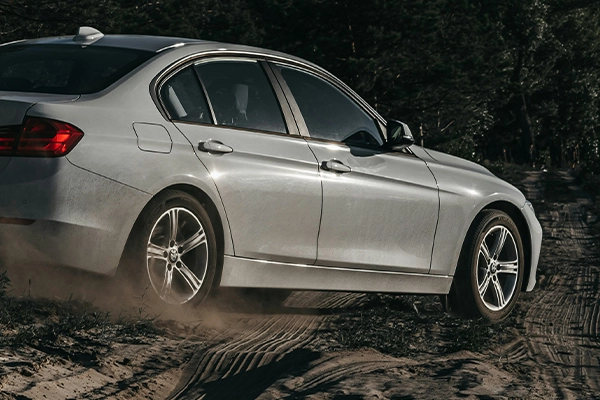
True to the BMW tradition, XDrive systems are rear-drive biased in almost all cases. The one exception to this is on newer models like the X1, X2 and some 1 & 2 Series. These cars are front-drive biased, but are able to send power to the rear when needed. We will cover these systems, known as Haldex, later in the article.
Quattro
Audi revolutionized all-wheel drive in the 1970s, becoming the first company to install permanent AWD systems in passenger vehicles. Quattro systems have gone through many iterations since its inception. Due to the fact that any AWD system installed in an Audi is branded “quattro”, the word is more of a marketing term now than a name for a specific technology.
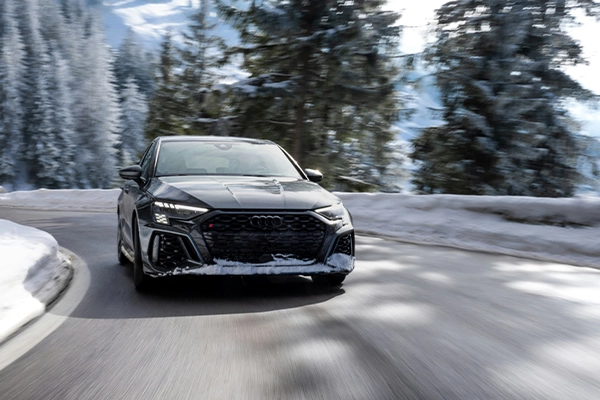
Similar to XDrive, Quattro systems can be grouped into two categories; Quattro with a center differential and Quattro without a center differential.
Quattro with a Torsen Center Differential
Quattro systems with a Torsen center differential are used in vehicles with a longitudinal engine layout. This means the engine runs the long way (front to back). These systems are often considered “true” Quattro, as they can trace their lineage back to original Quattro all-wheel drive from the 1970s.
Early systems used a manually locking center differential with a 50/50 power split between the front and rear. As time went by, the technology evolved, resulting in the removal of the manual locking differential, and a change in default power distribution to 40/60 front to rear.
Quattro with Ultra
Since 2016, Audi has used a version of center diff Quattro that has the ability to decouple the rear drive and operate as a front wheel drive system, similar to Haldex. Quattro with Ultra improves fuel efficiency when extra traction isn’t needed.
Quattro without a Torsen Center Differential
For vehicles with a transverse engine layout (think Audi A3 and TT), a completely different AWD system is used. This system is virtually identical to the XDrive used in the X1/X2. Developed by Haldex in the late 1990s, this AWD system is front wheel drive biased, and uses a pump to engage the clutches in the rear differential when the front wheels lose traction.
The main benefits of a Haldex system are improved fuel economy and packaging in vehicles that are traditionally front wheel drive.
4Matic
Mercedes-Benz offers similar all-wheel drive options to Audi and BMW under the name 4Matic. Similar to Quattro, early 4Matic systems used manual locking differentials. These early systems could toggle between a two wheel and four wheel drive mode.

4Matic Permanent All-Wheel Drive
Modern 4Matic systems employed full time AWD similar to XDrive and Quattro. The Antilock Braking System and engine management control where power is sent. Most of Mercedes larger models (C-Class and up) use this modern version of 4Matic.
4Matic Variable All-Wheel Drive
Some 4Matic systems (those found on the CLA and GLA) use a variable AWD system that functions like a Haldex system. These vehicles are front-drive biased, but have the ability to send up to 50% of the power to the rear wheels.
Which AWD system is best?
This is a difficult question to answer. If you ask three different owners, you would get three different answers.
Some will argue Audi’s system is best due to their trailblazing efforts and racing heritage with Quattro in the 70s and 80s. At the same time, the off road capabilities of some Mercedes vehicles far surpasses Quattro equipped cars (think G-class SUVs). Lastly, the rear-drive biased XDrive from BMW could be seen as the most performance-focused system out of the three.
All three brands offer a front-drive biased system as well for smaller vehicles in their lineups. Ultimately, the better system comes down to personal preference, needs, and the kinds of driving you do.
European All-Wheel Drive Service & Repair in The Salt Lake Valley
Mercedes, BMW, and Audi all offer advanced AWD systems across their model ranges. Each brand employs somewhat different technologies to provide improved traction and performance. One thing that’s the same across all three? The need for proper maintenance and if needed, professional repairs. Luckily for you, Alex’s Autohaus is here to help. Our skilled Midvale, Utah European vehicle techs have the experience needed to service or repair the AWD systems in your car, whether it’s Quattro, 4Matic, or XDrive. Give us a call or schedule an appointment online today!

Nationwide Warranty
3 YEAR, 36,000 MILE
Alex’s Autohaus offers our customers the Tech-Net Peace of Mind Nationwide Warranty, which is honored at over 10,000 service centers across the country. Our warranty covers workmanship for 36 months or 36,000 miles, whichever comes first. Parts are covered under their respective manufacturer-specified warranties, which can vary.